
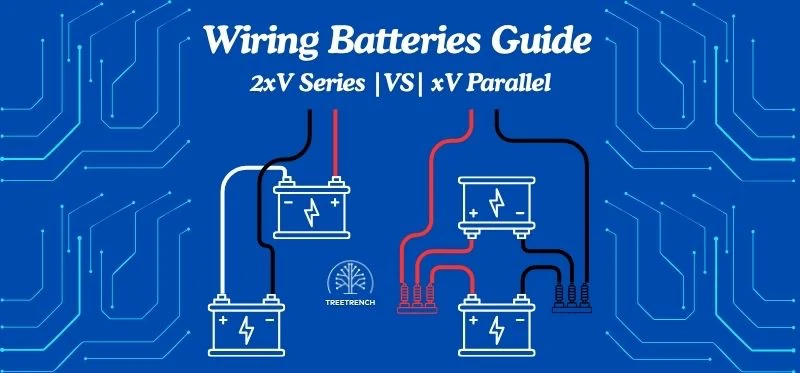
Batteries in Series vs Parallel
If you’re new to off grid power, campervan electrics, or DIY solar, you’ve probably heard phrases like batteries in parallel, batteries in series, or maybe even both a mix of batteries in series and parallel. Understanding the difference is essential before wiring your battery bank, not only for performance, but also for safety!
This beginner friendly guide explains the differences clearly so you can choose the right setup for your needs.
Disclaimer:
This post is for general information and educational purposes only and does not constitute professional electrical advice. Electrical systems can be hazardous so always follow manufacturer instructions, relevant UK regulations, and consult a qualified professional before installation or modification.
What’s the Difference Between Series and Parallel?
Series and parallel refers to a term used in circuits when connecting electrical components together. When it comes to creating battery banks you can apply series or parallel connections to either increase system voltage or increase capacity.
For example, our battery banks are wired professionally in series, parallel or both depending on selected capacity.
1. Batteries in Series
A series circuit increases voltage while keeping capacity (Ah) the same.
Example:
If you connect two 12V 100Ah batteries in series you will create a 24V 100Ah battery storage system. This is the method used when you want a higher system voltage, for example to power appliances that require 24V.
Pros of wiring batteries in series:
- You will get higher voltages which means a lower current, saving you money on cables.
- Higher energy efficiency especially if powering large appliances (3kW+)
Cons of wiring batteries in series:
- If one battery fails, the whole system is affected
- All batteries must be the same brand, age, voltage, and capacity
2. Batteries in Parallel
A parallel circuit increases capacity (Ah) while keeping voltage the same.
Example:
If you connect two 12V 100Ah batteries in parallel you will create a 12V 200Ah battery storage system. This is the method used when you want to keep the system voltage the same but want to extend your energy storage, for example to power appliances for longer.
Pros of batteries in parallel:
- Increases system runtime due to more usable energy without changing its voltage
- If one battery goes weak, the system may still function
Cons:
- If higher currents are drawn thicker cables will be required
- Battery imbalance may occur, where one battery receives more charge than the other
12V Batteries in Series vs Parallel: Which Is Better?
If you’re choosing between 12V batteries in series vs parallel, here’s the simple answer:
Choose Series If:
- You have 12V batteries but need a 24V or 48V system
- You want a smaller current flow through the cables
- You plan to design a large off grid solar setup (5 kWh+)
Choose Parallel If:
- You want to increase battery capacity but don’t want change the system voltage
- Your daily energy use is low (<5 kWh)
How to Wire Batteries in Series (Simple Steps)
If you’re wiring batteries in series, follow this:
- Connect the positive terminal of battery 1 to the negative terminal of battery 2.
- Use the free positive and free negative terminals as your system output.
- Ensure the cables between batteries are the same length and size.
- Make sure the batteries are the same voltage, age, and capacity.
See figure below:

How to Wire Batteries in Parallel (Simple Steps)
- Connect positive to positive.
- Connect negative to negative.
- Connect opposite corners for proper balancing when possible (called diagonal wiring, irrelevant if a busbar is used).
- Ensure the cables between batteries are the same length and size.
- Make sure the batteries are the same voltage, age, and capacity.
We recommend using a busbar to keep the wiring tidy, as shown in the figure below.

Can You Mix Series and Parallel Together?
Yes this is called a series parallel battery bank and allows you to increase both voltage and capacity.
However, it should only be done by people who understand battery balancing, cable sizing, and fusing. For most van and off grid setups, sticking to simple series or parallel is safer.
Final Tips for a Safe Battery Bank
- Only use batteries of the same type, age, brand, voltage, and capacity
- Use a fuse or circuit breaker located as close as possible to the battery
- Use correctly sized cables to avoid voltage drop and overheating
- Keep all connections tight and corrosion free
- If using lithium, ensure your BMS supports series connections
Need Help Choosing the Right Setup?
If you’re building a solar system for a campervan, boat, or off grid shed and need advice on whether to choose batteries in series or batteries in parallel, we can help.
If you already bought a kit but not sure how to fit or wire it, we can create a PDF with wiring diagrams and instructions.

Leave a Reply